
Cure vs. Care: Understanding the Difference Between Curative and Palliative Treatment

When you or a loved one receives a serious diagnosis, the medical jargon can feel like a foreign language. Doctors discuss protocols, prognosis, and treatment plans, often tossing around terms like “curative,” “palliative,” and “hospice.” For many families, these terms are not just confusing—they are frightening.
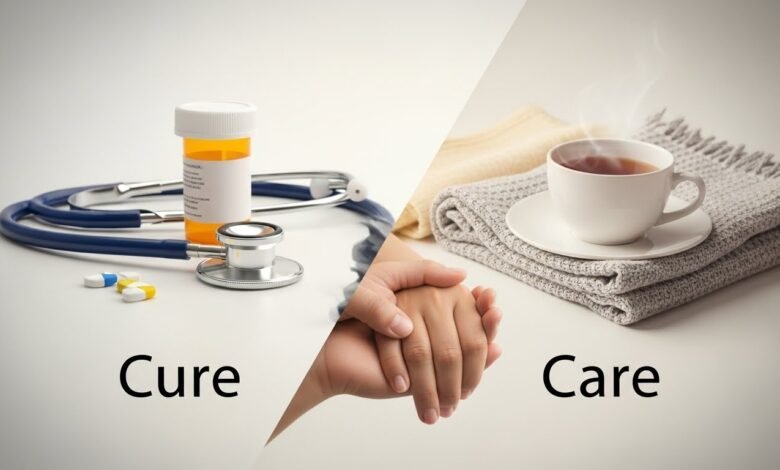
There is a common misconception that you must choose between fighting an illness and being comfortable. This is the “Cure vs. Care” dilemma. Many people believe that accepting “care” (palliative support) means giving up on the “cure.” This could not be further from the truth.
Understanding the distinction between palliative care and curative treatment is essential for making informed medical decisions. It empowers patients to advocate for a treatment plan that not only targets the disease but also protects their quality of life. At Cure and Care, we believe that the best health outcomes happen when these two approaches work together.
This article breaks down the definitions, goals, and timing of these treatments, helping you navigate the complex landscape of modern healthcare.

What is Curative Treatment? (The “Cure”)
Curative treatment is what most of us think of when we go to the hospital. It is the aggressive pursuit of a remedy. The primary goal of curative care is to eradicate the disease, fix the injury, or reverse the condition.
In this model, the focus is almost entirely on the biological problem. Test results indicate the treatment’s success: Is the tumor shrinking? Is the infection gone? Is the bone healed?
Characteristics of Curative Care:
- Goal: To extend life and return the patient to full health.
- Methods: Surgery, chemotherapy, radiation, antibiotics, immunotherapy, and physical rehabilitation.
- Trade-offs: Curative treatments often come with significant side effects. For example, chemotherapy may cure cancer but cause severe nausea and fatigue. In the curative model, these temporary sufferings are accepted as the price to pay for a long-term cure.
The curative mindset is “fighting.” It is reactive and often intense. While it is obviously vital, it has a limitation: it focuses on the disease, sometimes at the expense of the person.
What is Palliative Care? (The “Care”)
Palliative care is often misunderstood. Many people hear the word “palliative” and immediately think of death or giving up. This myth prevents thousands of patients from getting the relief they deserve.
Palliative care is specialized medical care for people living with a serious illness. This type of care focuses on relieving the symptoms and stress of the disease. The goal is to improve the quality of life for both the patient and the family.
Characteristics of Palliative Care:
- Goal: To prevent or treat symptoms and side effects (pain, nausea, anxiety, insomnia) and to handle emotional, social, and spiritual problems.
- Methods: Pain management medication, nutritional counseling, relaxation techniques, family counseling, and coordinating care between different doctors.
- Timing: It is appropriate at any age and at any stage in a serious illness, and it can be provided alongside curative treatment.
The palliative mindset is “supporting.” It looks at the patient as a whole human being, not just a set of symptoms to be fixed. It asks, “How can we make your day better?”

Palliative Care vs Curative Treatment: Key Differences
To navigate your options, it helps to see the direct comparisons between these two approaches. While they are different, remember that they are not mutually exclusive.
1. The Primary Objective
- Curative: The objective is to prolong life by eliminating the threat. The focus is on the future (recovery).
- Palliative: The objective is to improve the quality of life right now. The focus is on the present moment (comfort).
2. Tolerance for Side Effects
- Curative: Side effects (like hair loss or surgical pain) are tolerated because they lead to a cure.
- Palliative: Side effects are the enemy. The treatment is explicitly adjusted to minimize pain and discomfort.
3. The Medical Team
- Curative: Led by specialists in the disease (e.g., oncologists, cardiologists, surgeons).
- Palliative: Led by a multidisciplinary team including doctors, nurses, social workers, and chaplains who specialize in symptom management.
The Integrated Model: Having “Cure” and “Care” Together
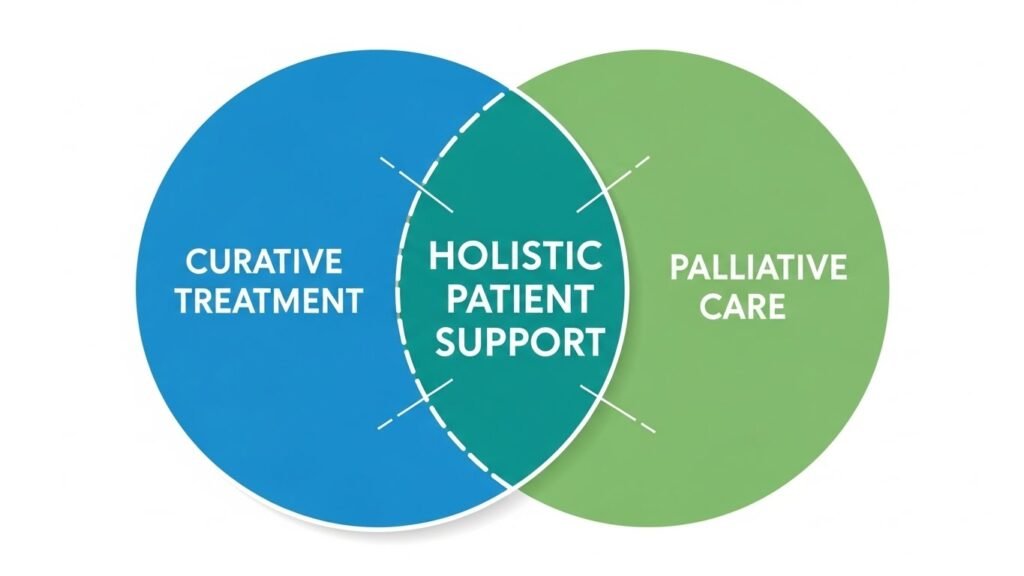
The old model of medicine viewed these as separate phases: you try to cure the patient, and if that fails, you switch to palliative care. This is an outdated and harmful way to view medicine.
Modern healthcare advocates for “Concurrent Care.” This means you can receive curative treatments and palliative support simultaneously.
Why Combine Them?
Imagine a patient undergoing aggressive chemotherapy for cancer.
- The Cure: The chemo drugs are attacking the cancer cells.
- The Care: A palliative care team prescribes anti-nausea medication, helps the patient manage anxiety about the diagnosis, and provides nutrition advice to keep their strength up.
Studies show that patients who receive early palliative care alongside their curative treatment often live longer than those who only receive curative treatment. Why? Because their bodies are not as worn down by pain and stress, they can tolerate the medical therapies better.
Distinguishing Palliative Care from Hospice
This is the source of most confusion. While all hospice care is palliative, not all palliative care is hospice.
Palliative Care
- When: Can begin at diagnosis.
- Treatment: Can continue alongside curative treatments (like chemo or dialysis).
- Location: Can be given in hospitals, clinics, or at home.
Hospice Care
- When: Begins when curative treatment is no longer working, or the patient chooses to stop it. It is generally reserved for patients with a life expectancy of six months or less.
- Treatment: Curative attempts stop. The sole focus becomes comfort and dignity at the end of life.
- Location: Usually provided at home, but also in hospice centers or nursing homes.
Understanding this distinction removes the fear. Accepting palliative care does not mean you are dying; it means you are choosing to live well while you fight your illness.
How to Advocate for the Care You Need
If you or a loved one is suffering from a chronic or severe illness, do not wait for the doctor to bring up palliative care. Unfortunately, some medical professionals are so focused on the “cure” that they overlook the “care.”
Questions to Ask Your Doctor:
- “Can we consult with a palliative care specialist to help manage these side effects?”
- “What are the goals of this new treatment? Will it cure the disease or slow it down?”
- “How will this treatment affect my daily life, and what can we do to minimize that impact?”
You have the right to be comfortable. You have the right to have your pain managed. You have the right to psychological support.

The Role of Family Caregivers
For the family caregiver, understanding the difference between palliative care and curative treatment is a relief. Caregivers often carry the heavy burden of trying to keep their loved one comfortable while also pushing for medical results.
Palliative care teams support the family, not just the patient. They can help you navigate the healthcare system, assist with complex decision-making, and provide emotional support for the stress of caregiving. If your loved one is in pain, you are not failing them; you need to bring in the “Care” team to support the “Cure” efforts.
Conclusion
Medicine has two hands: one hand fights the disease, and the other hand holds the patient. For too long, we have focused only on the fighting hand.
The distinction between palliative care and curative treatment is not about choosing life or death. It is about choosing how you want to live while navigating an illness. Curative treatment adds days to your life. Palliative care adds life to your days.
At Cure and Care, we encourage you to embrace both. Do not suffer in silence in the pursuit of health. Ask for the support you need to make your journey as comfortable and dignified as possible.