
The Emotional Toll of Chronic Illness: Practical Coping Strategies for Patients


Receiving a diagnosis for a chronic illness is a life-altering event. In a single moment, your vision of the future shifts. Doctors, nurses, and specialists immediately focus on the physical side of things: the “Cure.” They prescribe medications, schedule surgeries, and outline physical therapy routines.
However, there is a silent side to illness that often goes untreated: the emotional impact. The “Care” aspect of recovery isn’t just about managing pain or symptoms; it is about managing the wave of feelings—fear, anger, grief, and anxiety—that accompanies a health crisis.
Mental health and physical health are deeply interconnected. Research shows that untreated anxiety or depression can actually worsen physical symptoms and lower your immune response. Therefore, learning coping strategies for chronic illness is not just about feeling better emotionally; it is a critical part of your medical treatment plan.
This guide explores the emotional stages of diagnosis and provides actionable tools to help you build resilience, find balance, and reclaim your joy despite your condition.
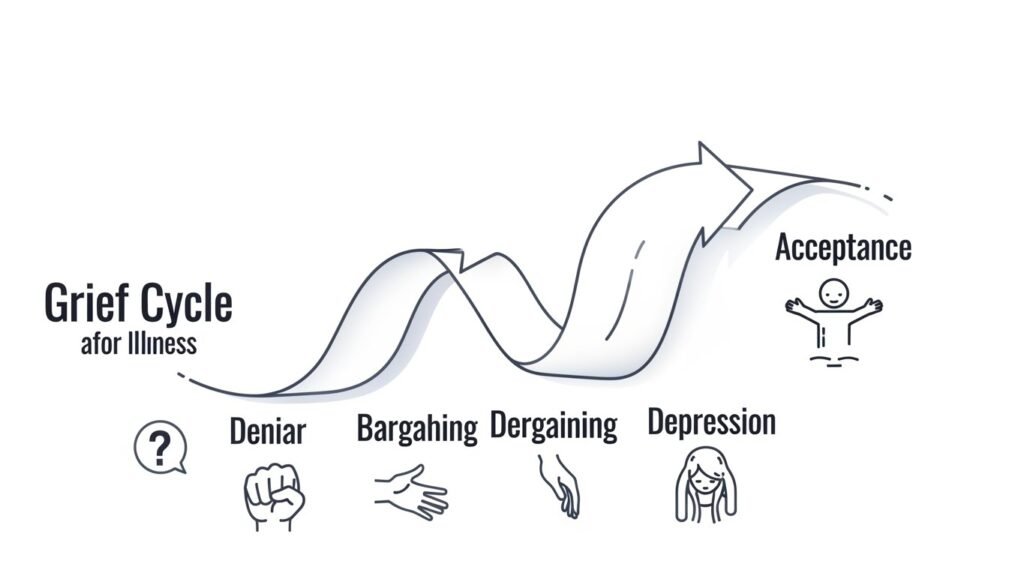
Understanding the “Grief Cycle” of Diagnosis
Many patients are surprised to feel a sense of mourning when they are diagnosed. You might think, “I’m still alive, so why am I grieving?” The reality is that you are grieving the loss of your “former self”—the version of you that was healthy, pain-free, or carefree.
Psychologists often apply the five stages of grief to chronic illness. Recognizing these stages can help you feel less crazy and more understood.
- Denial: “The lab results must be wrong.” You might ignore symptoms or continue unhealthy habits, hoping the problem will go away.
- Anger: “Why me? I ate healthy, I exercised!” You may feel fury at your body, your doctor, or the world.
- Bargaining: “If I just go vegan/run every day/meditate, maybe this will go away.”
- Depression: A deep sadness or hopelessness about the changes in your life.
- Acceptance: This doesn’t mean you like being sick. It means you acknowledge the reality and are ready to adapt.
It is essential to know that these stages are not linear. You might feel acceptance on Tuesday and anger on Wednesday. That is okay. It is part of the process.
Strategy 1: Validate Your Feelings
The first step in coping is to permit yourself. Permit yourself to feel bad. There is a toxic trend in wellness culture that insists on “positive vibes only.” While optimism is helpful, forced positivity can be damaging.
If you are in pain or if you are frustrated that you can no longer hike or play sports like you used to, it is healthy to acknowledge that loss. Suppressing negative emotions consumes mental energy that your body needs for healing.
Practice “Both/And” Thinking
Instead of forcing yourself to be happy, try holding two truths at once:
- “I am sad that I have this condition, and I am grateful for the medical care I have.”
- “I am in pain today, and I can still enjoy this cup of tea.”
Strategy 2: Build a flexible Routine
Chronic illness often brings chaos. Appointments, symptom flares, and medication schedules can make you feel like you have lost control of your time. Re-establishing a routine—even a flexible one—can reduce anxiety.
However, the keyword is flexible. A rigid routine will only lead to frustration when your body doesn’t cooperate.
The “Good Day / Bad Day” Plan
Create two versions of your daily routine:
- The Good Day Plan: Includes work, exercise, chores, and social activities.
- The Bad Day Plan: Includes the bare minimums (hygiene, medication, rest) and pre-planned comfort activities (audiobooks, gentle stretching).
When you wake up, assess your body and choose the plan that best suits you. This prevents the feeling of “failure” when you cannot accomplish everything on a high-energy list.
Strategy 3: Find Your Tribe (Support Systems)
Isolation is the best friend of depression. Chronic illness can be isolating because you may feel like “healthy people” don’t understand your struggle. You might avoid social events because you are tired or worry about being a burden.
Connecting with others who share your experience is transformative.
- Support Groups: Whether online or in-person, talking to people who understand the specific challenges of your condition (e.g., a Lupus support group or a Diabetes forum) allows you to drop the mask.
- Educate Your Inner Circle: Your friends and family likely want to help but don’t know how. Be clear about what you need. “I don’t need advice; I just need you to listen,” is a powerful sentence.

Strategy 4: Mindfulness and Stress Reduction
We mentioned earlier that stress worsens physical symptoms. This creates a vicious cycle: Pain causes stress -> Stress causes muscle tension and inflammation -> Tension causes more pain.
You can break this cycle with mindfulness tools. You don’t need to be a spiritual guru to benefit from these practices.
- Body Scanning: Lie down and mentally scan your body from toes to head. Notice where you are holding tension (jaw? shoulders?) and consciously release it.
- Visualization: When in pain, visualize the pain as a color or object leaving your body, or visualize a soothing light healing the area.
- Breathwork: Slow, deep abdominal breathing stimulates the vagus nerve, which tells your brain to relax.

Strategy 5: Redefine Your Identity
One of the most complex parts of chronic illness is the identity crisis. If you were “the runner,” “the hard worker,” or “the reliable parent,” and illness limits your ability to do those things, who are you?
It is crucial to separate who you are from what you do. You are worthy of love and respect simply because you exist, not because of your productivity.
Start exploring new hobbies or interests that fit your current abilities.
- If you can’t run, can you mentor others?
- If you can’t work full-time, can you express your creativity through writing or art?
- If you can’t travel, can you learn a new language?
Finding purpose outside of your illness prevents the disease from becoming your entire identity.
When to Seek Professional Help
Sometimes, self-care strategies are not enough. Rates of depression are significantly higher in people with chronic conditions. It is not a sign of weakness to need help; it is a sign of responsibility.
Seek professional help if:
- You feel hopeless or empty for more than two weeks.
- You have lost interest in things you usually enjoy.
- Your sleep or appetite has changed drastically.
- You have thoughts of self-harm.
Therapists who specialize in “health psychology” or chronic pain are specifically trained to help you navigate this unique journey.

Conclusion
The journey of coping with chronic illness is a marathon, not a sprint. There will be days when you feel strong and days when you feel defeated. Both are valid.
By understanding the grief cycle, building a flexible routine, seeking support, and practicing mindfulness, you can make a rich, meaningful life, even with a diagnosis. Remember the “Cure and Care” philosophy: While doctors work on the cure, you have the power to cultivate the care.
Be gentle with yourself. You are navigating a difficult path, and you are doing better than you think.